

Let’s talk about Elin Roth.
Once — and not even that long ago — she had a voice. Her prose didn’t just cut; it excavated. She wrote short stories in which police officers discovered what women had buried in freezers while their daughters cowered in corners. Men bled quietly on their porch swings while their rural towns cracked open like dropped fruit.

Her first work, Becoming Zoe, was about a woman who saves and loses her daughter by becoming her. It conjured emotions that were both “visceral” and “lucid.” When she heard it described as “brutalist magic realism,” she smiled with her eyes.
But that was then.
Now?
Now she writes pieces like “The Moral Geography of the Trader Joe’s Parking Lot” and “A Thought on Death Prompted by a Roomba in a Discount Hotel.” Her website is called— oh yes, she has a website now — Minor key: Dispatches from the soft apocalypse. Every entry is a neat, poignant reflection on life’s little cruelties, but capped at 800 words and formatted with tasteful italics.
The voice is still there — curled in the corner of every paragraph like a feral cat. You can feel the weight beneath the wit. But it’s all been sanded down to something “digestible.” The kind of prose that gets quoted on Instagram next to a latte and a hand wearing rings. Each post, a finely-tuned spasm. Observations start mundanely and spiral into metaphysical riddles, because a stubbed toe is a meditation on inherited failure. A moldy lemon organically expands into a treatise on hope as rot deferred. Of course, there are diagrams. Sometimes there’s even an audio version where she reads the piece in a tone that suggests she’s either laughing or on the verge of crying.
It’s not bad. It’s brilliant, even. In a sort of deranged, post-literary, content-is-my-god-now kind of way.
But we remember.
We remember The Ballad of Jason Joe. A coal miner’s son returns from prison and spends the rest of the story trying to atone for a life he lost by bringing meaning to a life squandered. You couldn’t breathe for ten pages, but you had never felt more alive.
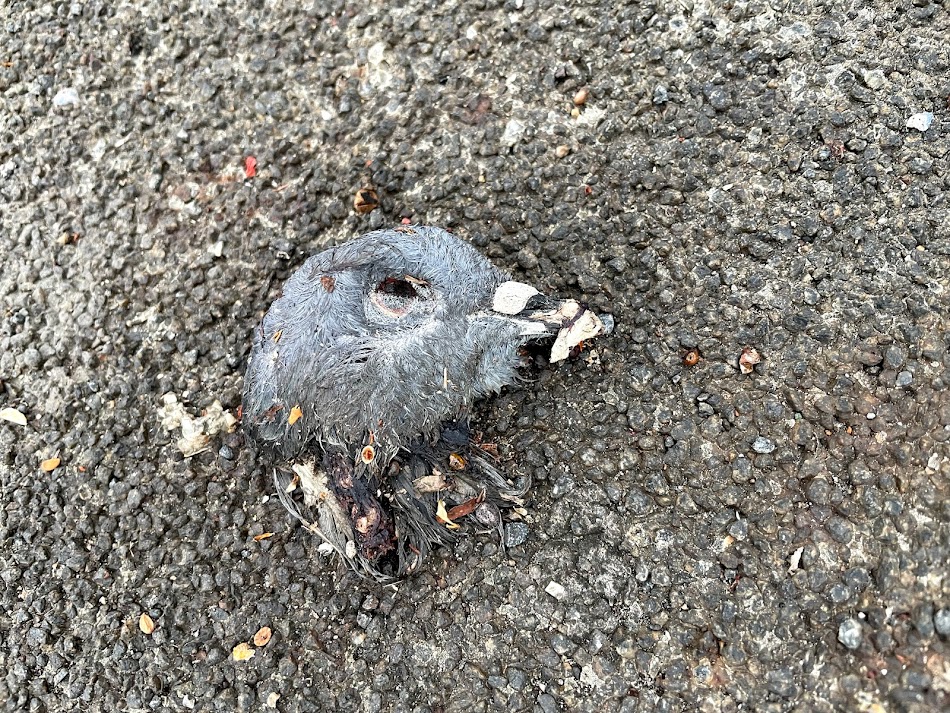
Now she writes about whether pigeons experience spiritual doubt. She breaks down the cereal aisle as a metaphor for capitalism’s false sense of choice. But, she’s online. She’s present. Her pithy thoughts go viral. A recent banger: We are all Schrödinger’s cats: alive, dead, and rifling through the bins of meaning.
People love the website. They quote it at brunch. There are podcasts.
But the fiction? The blood-and-bone, sinkhole-of-the-soul, pack-of-wild-dogs-inside-a-funeral-home fiction?
Gone.
She hasn’t touched Jason Joe in months. She thinks about egg cartons instead. But it’s all good. Well, maybe not that good. But she can still feel them: that deep-buried, thrashing— her characters living in her head and still trying to claw out of her ribcage.
She remembers that she once wrote a 12-page scene where she forgot who she was and became a nodding junkie with a winning smile and pure heart. Now she can only write, “What if our Google search history is the true record of our afterlife?”
They’re laughing. They’re clapping. But perhaps most importantly, they are noticing…
But she remembers.

 Wood Shed Writers
Leave a comment